Defending the Cloud
The 1963 Arizona “supernatural cloud” is the Message movement’s most-displayed proof of William Branham’s prophetic vindication. It has also been thoroughly debunked. This is how Message pastors defend it anyway — and the recurring logical fallacies that hold each defense together.
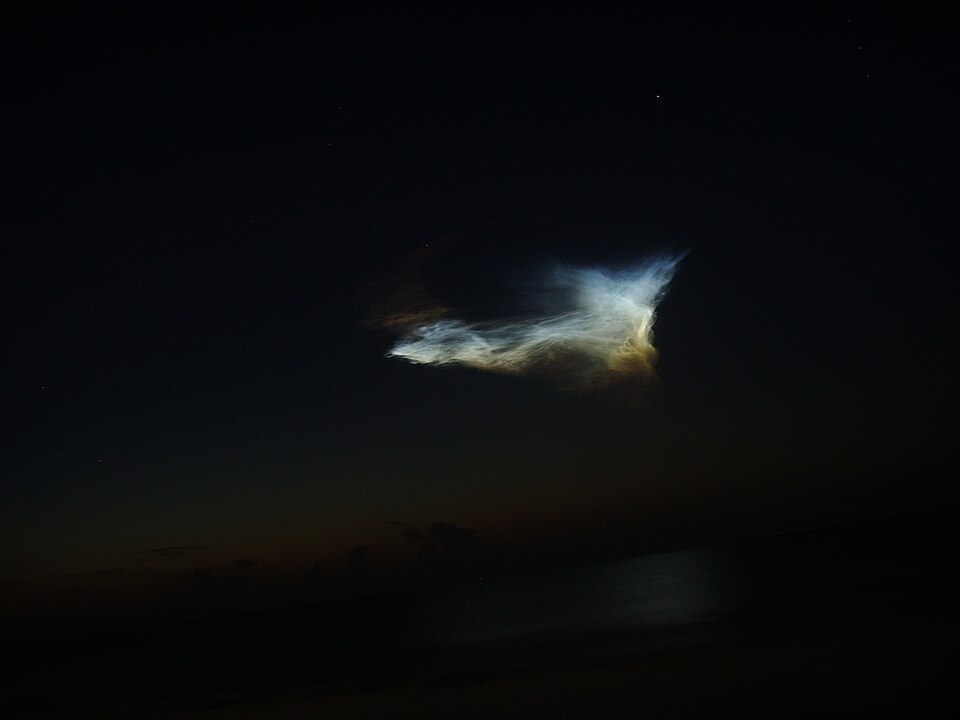
For sixty years, a photograph of a mysterious cloud over Arizona — February 28, 1963 — has been the Message movement’s single most-displayed piece of physical evidence that William Branham was a vindicated prophet. The image hangs in churches, appears on publications, and is handed to newcomers as proof.
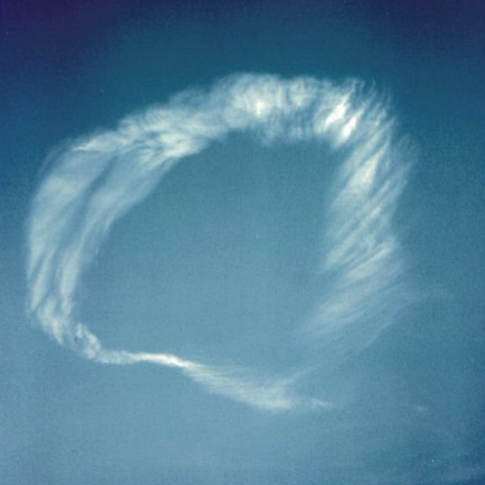
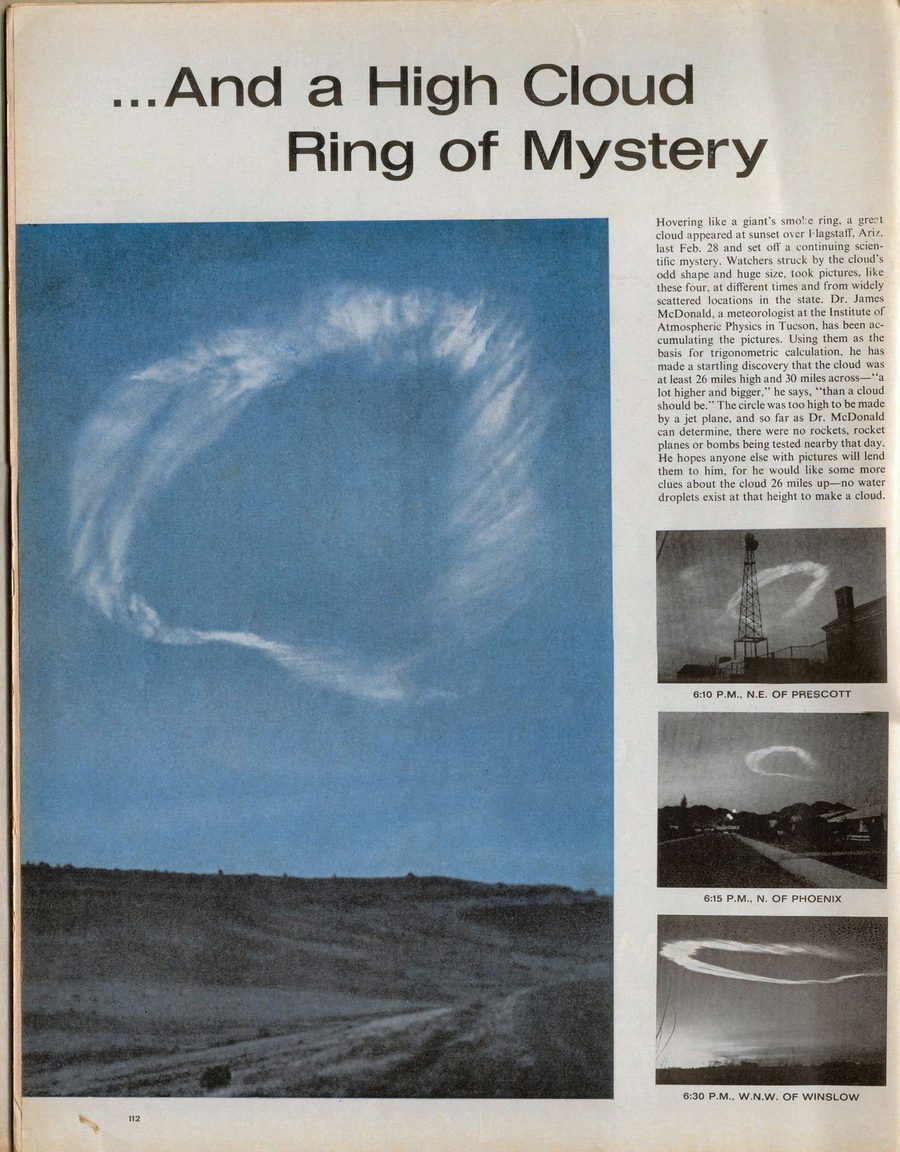
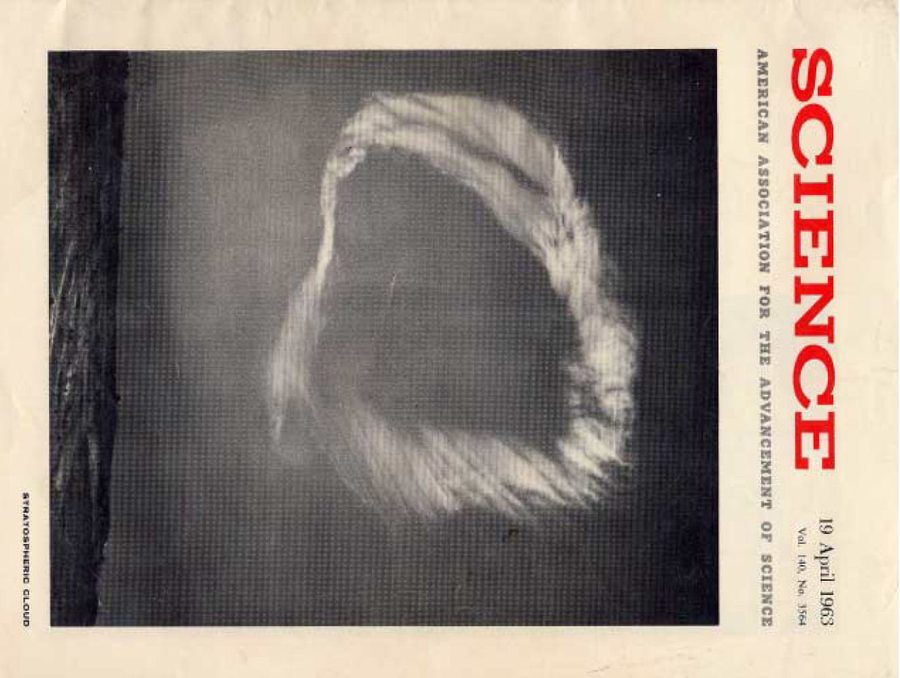
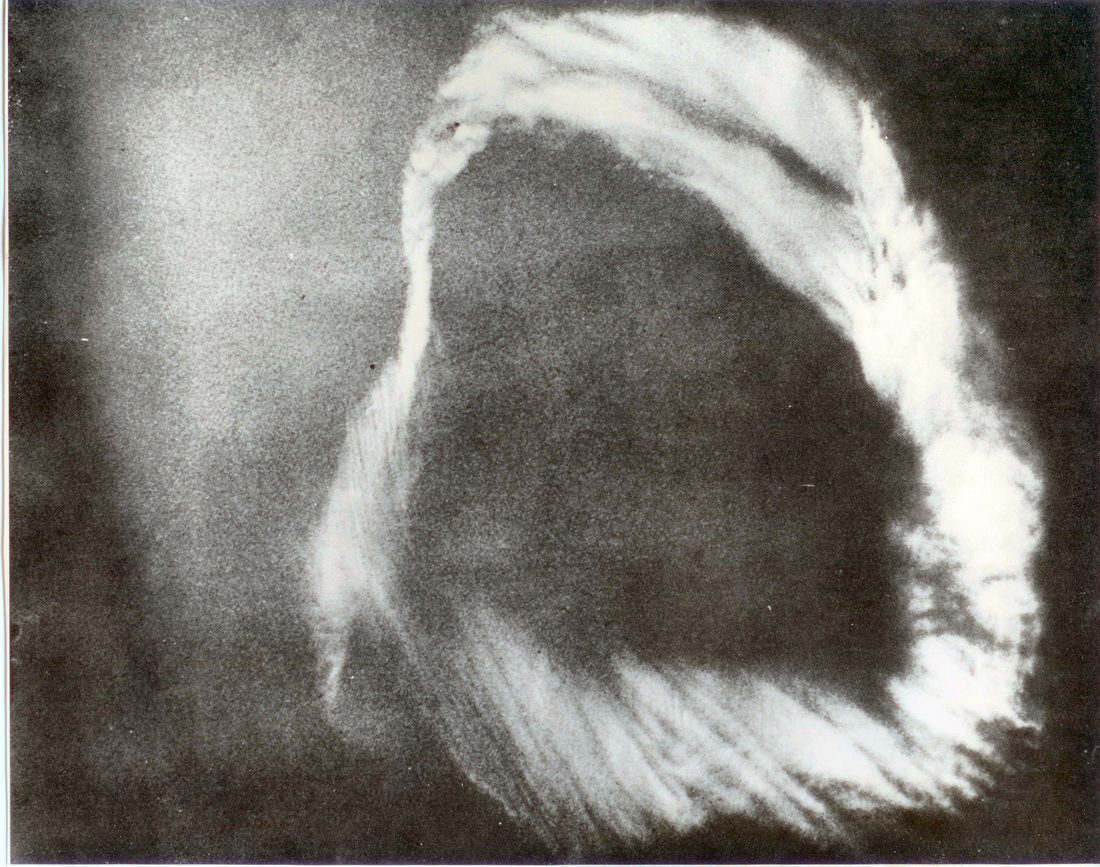
The cloud has not held up. It appeared at an altitude of roughly twenty-six miles — far above where water-vapour clouds can form — and its shape and timing match the high-altitude debris of a rocket detonation. More damaging still: Branham was not at the cloud. The documented record — including the account of his own daughter, Rebekah Branham Smith — places him at home in Tucson on February 28, some two hundred miles south of where the cloud formed near Flagstaff. As the quotes below show, the pastors defending the cloud do not dispute that he was absent — several volunteer it themselves.
What happens next is the subject of this article. Confronted with those facts, Message pastors do not drop the cloud. They defend it — and the defenses fall into five recognisable strategies, each built on a recurring logical fallacy. Below are twenty-seven of those defenses, in the speakers’ own words, verified against the original sermon transcripts, with the fallacy underneath each one named.
Why the cloud doesn’t hold up — in brief
- No prophecy. Branham never mentioned a cloud before it appeared. His December 1962 vision described angels in a pyramid formation; the “cloud prophecy” was claimed only afterward.
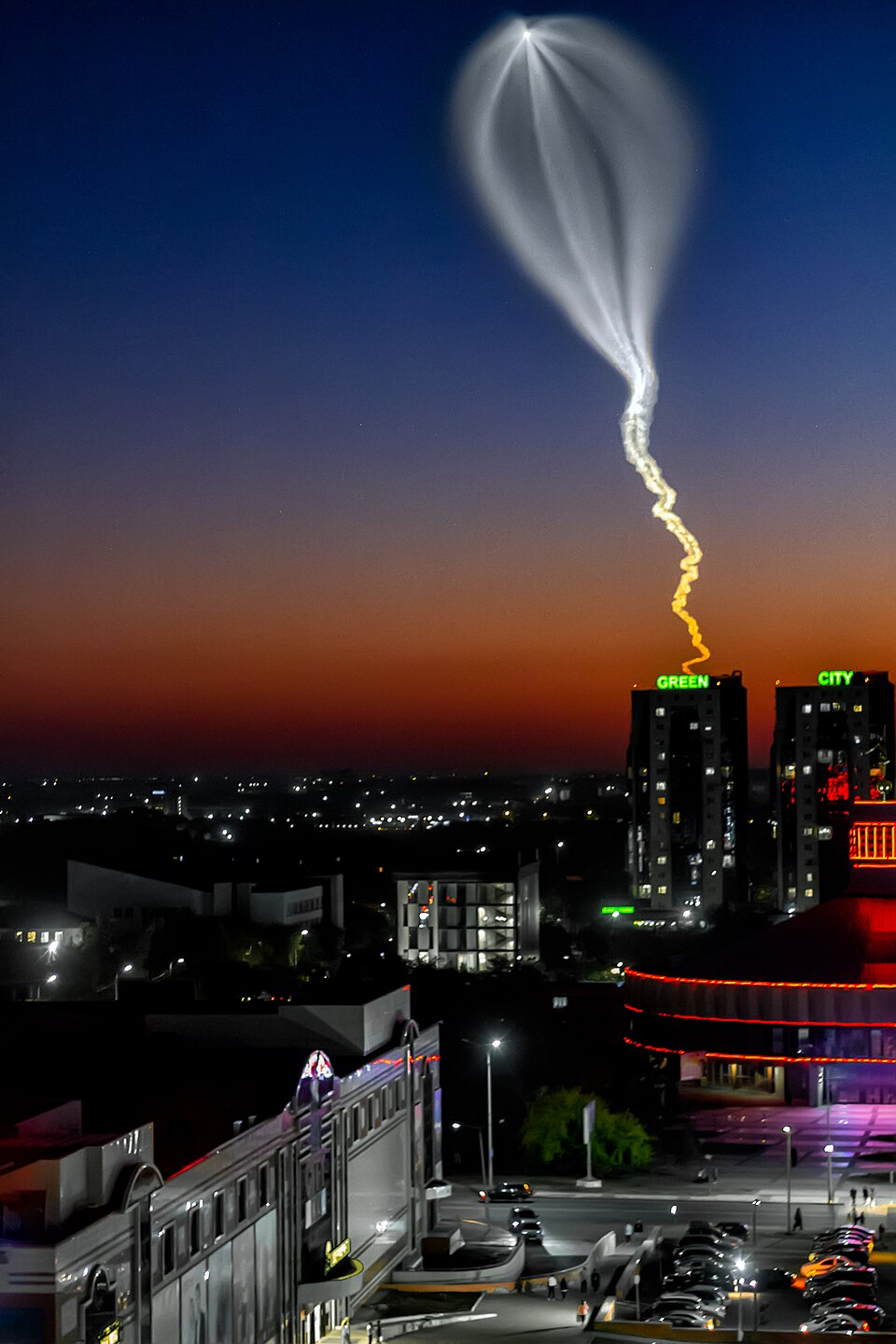
- A documented cause. On February 28, 1963 a Thor rocket launched from Vandenberg Air Force Base veered off course and was intentionally destroyed at about forty-four kilometres altitude — essentially the same height at which the cloud was measured near Flagstaff hours later.
- The Air Force confirmed it. A 1995 Air Force letter attributed the cloud to released missile propellant and water; Dr. James McDonald, the atmospheric physicist who investigated it, reached the same conclusion and dropped the case.
- Branham was not there. He was at home in Tucson — roughly two hundred miles from Flagstaff — when the cloud appeared on February 28. He later told it as a hunting story, placing himself beneath the cloud at Sunset Mountain — but the documented record has him driving to Houston on March 3 and only leaving Tucson to go hunting on March 6. The cloud had formed eight days before the hunting trip began.
- A second cloud. A smaller companion cloud was photographed nearby, consistent with a second rocket that day — and never mentioned by Branham.
This article is about the defenses, not the debunking. For the full case — photographs, launch records, and Air Force correspondence — see the research of Believe The Sign and the book Under the Halo: Examining the Legacy of William Branham, and the companion piece in Refutations.
“”
“”
“”
“”
“”
Every move in this section is unfalsifiable. "He was translated there by vision," "God sent it early on purpose," "it was a private sign for Branham," "even a rocket would still be God" — none of these can be tested, and none can be disproven. That is their function. An explanation that survives no matter what the evidence shows is not evidence; it is insulation. Branham's physical absence is a fixed, conceded fact. The defenses do not dispute it — they make it stop mattering.
Notice what has been surrendered. The cloud was presented for sixty years as objective, photographic, public proof. By the time the timeline has been "rescued," the claim has quietly shrunk to a private vision that left no evidence and that no one but Branham could ever have observed. The proof has been defended by abolishing everything that made it proof.
“”
“”
“”
“”
Every move here is symmetrical — it cuts against the cloud exactly as hard as against the rocket. If government records are worthless because Satan runs governments, then Branham's own appeals to documented vindication collapse with them. If no one who "wasn't there" can be believed, no one can affirm the cloud either. If only "absolute certainty" counts, the supernatural claim fails first, because it has none. And if a documented case — photographs, records, the launch itself — is merely "your opinion," then so is every claim, the believer's own certainty included.
This strategy does not defeat the evidence. It defeats the possibility of evidence — and then asks you to keep believing the one claim it happens to like. A method that disqualifies all data, applied honestly, disqualifies the cloud. It is only ever applied in one direction.
“”
“”
“”
“”
“”
“”
“”
Real science is checkable: its data are published, its method is open, and it follows the evidence wherever it leads. This works backward from a fixed conclusion. Rostron's headline "discrepancy" — millions of pounds of water against a rocket's thousands — quietly assumes the cloud was ordinary water vapour, which is the very question; a rocket-injected cloud of ice and propellant at the edge of space carries no such requirement. And the one statement in the series that can be verified — that Dr. McDonald "came to exactly the same conclusion" — is the reverse of the documented record.
A six-hour video is not six hours of evidence. Length, jargon and confident charts are persuasion aimed at a congregation with no way to check the math — and the single verifiable claim inside it, that the investigating scientist agreed, is false. Borrowed authority and manufactured precision are not measurement. The defense had to build a rival science because the real one had already returned its verdict.
“”
“”
“”
“”
The "Thus saith the Lord" filter, the "snow white pyramid" match, and the numerology are one move by three routes. The filter shrinks Branham's liability after the fact — only flagged statements count — so failures fall outside the line. The pyramid match and the numbers expand his hits after the fact — any vague image, any number, can be claimed — so successes fall inside it. Heads Branham wins; tails does not count.
A prediction that can only be evaluated after the outcome is known is not a prediction. If the rule for what counts as prophecy is written once the result is in, Branham can never be wrong — and a claim that can never be wrong was never telling you anything.
“”
“”
“”
“”
“”
“”
None of these statements engages the cloud at all. They operate on the listener instead of the argument: redirecting attention, ridiculing the doubter, questioning the critic's motives, labelling inquiry as disloyalty, and casting critics as demonically deceived. The shared effect is to make examining the evidence feel spiritually unsafe.
This is the most revealing strategy, because it concedes the most. You only change the subject when you cannot win it. A claim with a real answer gets the answer; a claim without one gets a reason you should not have asked.
“”
“”
Across the Message corpus — 71,330 transcripts, with ex-Message critical channels excluded — 2.1% of all sermons invoke the 1963 cloud. Year by year that rate barely moves: it holds between 1.5% and 2.5% in every year from 2015 through 2026, with no downward drift. 2024, the last full year, came in at 2.5% — the highest rate in the series, and well above every year from 2017 through 2021. The cloud was traced to a rocket and debunked in detail across exactly this stretch of years. The rate did not fall. The debunking did not move it.
Nor is the cloud preached evenly. Danny Mazzilli reaches for it in better than one sermon in six; Stephen Shembo, Barry Johnson and Wayne Lawson in better than one in ten. Most preachers raise it occasionally — one to four percent of their sermons. And twenty-four preachers with substantial bodies of work — Tito Moreira (829 sermons), Faustin Lukumuena (393), Ernest Montoya (372), John Martin (349) and twenty others — never raise it once. The cloud runs as a thin, steady thread through most of the movement’s preaching, thickens sharply in a few hands, and is absent altogether from others.
Each bar is the share of that year’s sermons that invoke the 1963 cloud (2015–2026). Across the full decade in which the cloud was traced to a rocket and debunked, the rate never leaves a narrow 1.5–2.5% band — it does not decline. 2026 (striped) is a partial year.
| Preacher | Sermons | Cloud | Share |
|---|---|---|---|
| Danny Mazzilli | 155 | 26 | 16.8% |
| Stephen Shembo | 337 | 38 | 11.3% |
| Barry Johnson | 164 | 18 | 11.0% |
| Wayne Lawson | 229 | 24 | 10.5% |
| Ben Norrod | 133 | 11 | 8.3% |
| Andrew Glover | 300 | 24 | 8.0% |
| Ron Peterson | 101 | 8 | 7.9% |
| Adrian Gengan | 178 | 14 | 7.9% |
| David Dienhart | 89 | 7 | 7.9% |
| Trevor Emond | 107 | 8 | 7.5% |
| Israel Powe | 180 | 10 | 5.6% |
| Tom Rae | 500 | 27 | 5.4% |
| Murphy Wong | 208 | 10 | 4.8% |
| Darrell Ward | 88 | 4 | 4.5% |
| Jack Duff | 309 | 14 | 4.5% |
| Chad Lamb | 819 | 35 | 4.3% |
| Nathan Bryant | 524 | 22 | 4.2% |
| Doug Baker | 967 | 39 | 4.0% |
| Matthew McGeary | 136 | 5 | 3.7% |
| Keith Reid | 443 | 16 | 3.6% |
| Edmond Raphino | 167 | 6 | 3.6% |
| Jonathan Martin | 565 | 20 | 3.5% |
| Wendall Martin | 258 | 9 | 3.5% |
| Ben Achut | 87 | 3 | 3.4% |
| Cam Smith | 123 | 4 | 3.3% |
| Andrew Spencer | 280 | 9 | 3.2% |
| Ed Byskal | 659 | 21 | 3.2% |
| Daniel Fraijo | 190 | 6 | 3.2% |
| Craig Booher | 128 | 4 | 3.1% |
| Shawn Martin | 264 | 8 | 3.0% |
| Jesse Smith | 1,442 | 43 | 3.0% |
| Isiah Brooks | 699 | 20 | 2.9% |
| Aaron McGeary | 655 | 16 | 2.4% |
| Matthew Watkins | 165 | 4 | 2.4% |
| Kidri Diggs | 165 | 4 | 2.4% |
| Chris Maritz | 1,532 | 37 | 2.4% |
| Gerald Lush | 167 | 4 | 2.4% |
| Samuel Browning | 953 | 22 | 2.3% |
| David McGeary | 177 | 4 | 2.3% |
| Ben Gloyne | 1,350 | 30 | 2.2% |
| Joe Adams | 180 | 4 | 2.2% |
| Michael Rae | 137 | 3 | 2.2% |
| Kenol Helas | 183 | 4 | 2.2% |
| Ben Pruitt | 984 | 21 | 2.1% |
| Chris Take | 94 | 2 | 2.1% |
| Tim Pruitt | 613 | 13 | 2.1% |
| David McGeary Sr | 146 | 3 | 2.1% |
| Luis Urrego | 147 | 3 | 2.0% |
| Simon Smith | 160 | 3 | 1.9% |
| Joseph Hamid | 219 | 4 | 1.8% |
| William Hasbun | 388 | 7 | 1.8% |
| Ibale Stephen | 111 | 2 | 1.8% |
| Israel Nkodima | 669 | 12 | 1.8% |
| B Manyeche | 279 | 5 | 1.8% |
| James Allen | 336 | 6 | 1.8% |
| Bill Ivy | 171 | 3 | 1.8% |
| Aaron Oglesby | 174 | 3 | 1.7% |
| Samuel Reyes | 195 | 3 | 1.5% |
| Donny Reagan | 284 | 4 | 1.4% |
| Newton Bennett | 291 | 4 | 1.4% |
| Jason DeMars | 151 | 2 | 1.3% |
| Theo Ovid | 764 | 10 | 1.3% |
| Wade Dale | 877 | 11 | 1.3% |
| Nauly Jean-Francois | 167 | 2 | 1.2% |
| Bob Black | 347 | 4 | 1.2% |
| Emmanuel Santos | 87 | 1 | 1.1% |
| Bloteh Won | 448 | 5 | 1.1% |
| Jason Watkins | 361 | 4 | 1.1% |
| Barry Coffey | 633 | 7 | 1.1% |
| Bernabé G. García | 272 | 3 | 1.1% |
| Kevin Crase | 91 | 1 | 1.1% |
| Lee Vayle | 212 | 2 | 0.9% |
| Paul LaFontaine | 215 | 2 | 0.9% |
| John Andes | 109 | 1 | 0.9% |
| Abraham Perez | 111 | 1 | 0.9% |
| John Curlett | 336 | 3 | 0.9% |
| Busobozi Talemwa | 358 | 3 | 0.8% |
| Gabriel Villalobos | 122 | 1 | 0.8% |
| Paul Haylett | 377 | 3 | 0.8% |
| John Alvarado | 126 | 1 | 0.8% |
| Steven Shelley | 637 | 5 | 0.8% |
| Dale Langstaff | 133 | 1 | 0.8% |
| Thomas Byler | 268 | 2 | 0.7% |
| Tim Burdette | 268 | 2 | 0.7% |
| Raymond Jackson | 482 | 3 | 0.6% |
| Timothy Pruitt | 486 | 3 | 0.6% |
| Richard Hyatt | 331 | 2 | 0.6% |
| John Simon | 347 | 2 | 0.6% |
| Tim Dodd | 224 | 1 | 0.4% |
| Caleb Perez | 245 | 1 | 0.4% |
| Isaac Ovid | 258 | 1 | 0.4% |
| Luke Gibson Sr | 269 | 1 | 0.4% |
| Henry Simmons | 288 | 1 | 0.3% |
| Samuel Dale | 901 | 3 | 0.3% |
| Ron Spencer | 351 | 1 | 0.3% |
| Tito Moreira | 829 | 0 | 0% |
| Faustin Lukumuena | 393 | 0 | 0% |
| Ernest Montoya | 372 | 0 | 0% |
| John Martin | 349 | 0 | 0% |
| Brian Naidoo | 326 | 0 | 0% |
| Eddie Sanchez | 291 | 0 | 0% |
| Daniel Evans | 245 | 0 | 0% |
| Emmanuel Tshimoa | 235 | 0 | 0% |
| Patrick Nkongolo | 145 | 0 | 0% |
| Carlos Torres | 144 | 0 | 0% |
| Alex Perez | 141 | 0 | 0% |
| Aaron Roberts | 138 | 0 | 0% |
| Katumba James | 133 | 0 | 0% |
| Benjamin Serna | 123 | 0 | 0% |
| Eli Ortiz | 117 | 0 | 0% |
| Andy Schuler | 111 | 0 | 0% |
| Matthew Morse | 105 | 0 | 0% |
| Raul Gonzalez | 103 | 0 | 0% |
| Billy Mbuyi | 101 | 0 | 0% |
| Brad Powell | 100 | 0 | 0% |
| Vidal Moreno | 87 | 0 | 0% |
| Fidel Avila | 85 | 0 | 0% |
| Bud Thompson | 81 | 0 | 0% |
| Lyle Johnson | 80 | 0 | 0% |
How this is measured. Each of the Message corpus’s 71,330 transcripts — ex-Message critical channels excluded, so a critic’s rebuttal is never miscounted as Message preaching — is attributed to a preacher through the site’s normalized speaker records, then counted as a 1963-cloud sermon when it carries an unambiguous marker — “mystery cloud,” the “ring of mystery,” Sunset Mountain, Peak or Crater, the Thor rocket — or when the word “cloud” falls within roughly 120 characters of a 1963 anchor: Flagstaff, the year 1963, “vindication,” the rocket-or-missile explanation, or Life magazine. That proximity rule is what separates the 1963 cloud from the corpus’s many unrelated “clouds” — clouds of glory, the cloud of witnesses, the Exodus pillar, the city of Flagstaff in a travel announcement. The measure is approximate: it can miss a sermon that names the cloud with none of these markers, and may occasionally catch a metaphor. Read the counts as a careful estimate, not a census. Preachers are sorted highest rate to lowest; the twenty-four shown in grey have no 1963-cloud sermon on record.
The debunking has been public for years; the preaching has not answered it — not in frequency, not in language. The cloud remains a steady minority note in Message sermons, called vindication whenever it is raised — and raised most by pastors preaching now, in 2024, 2025 and 2026. A disproven sign is not being quietly retired. It is being kept. (The corpus is not a controlled sample — channels were added over time — so the per-year totals are not a census; but the flatness of the rate, measured across thousands of sermons a year, is a real signal and not an artifact of sample size.)
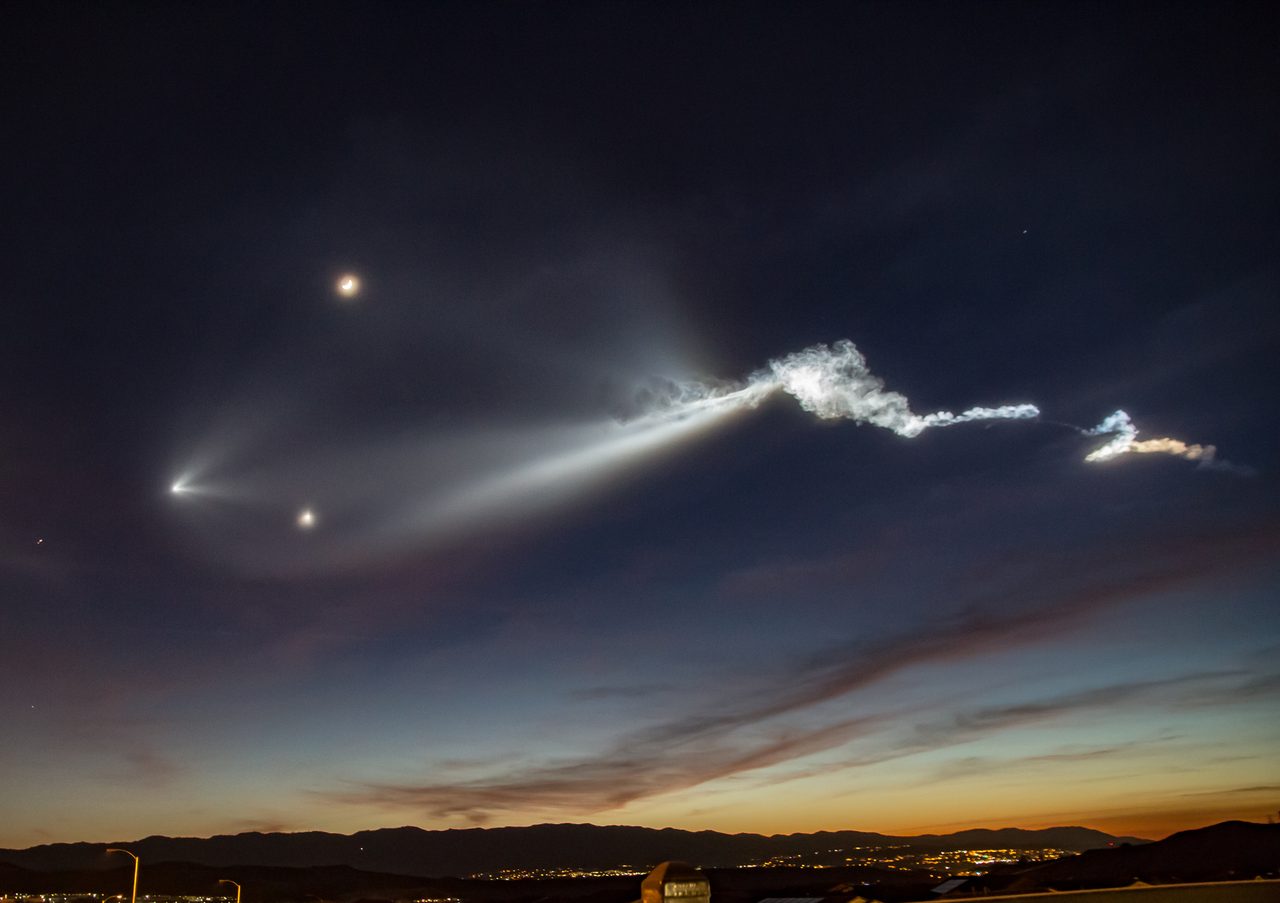
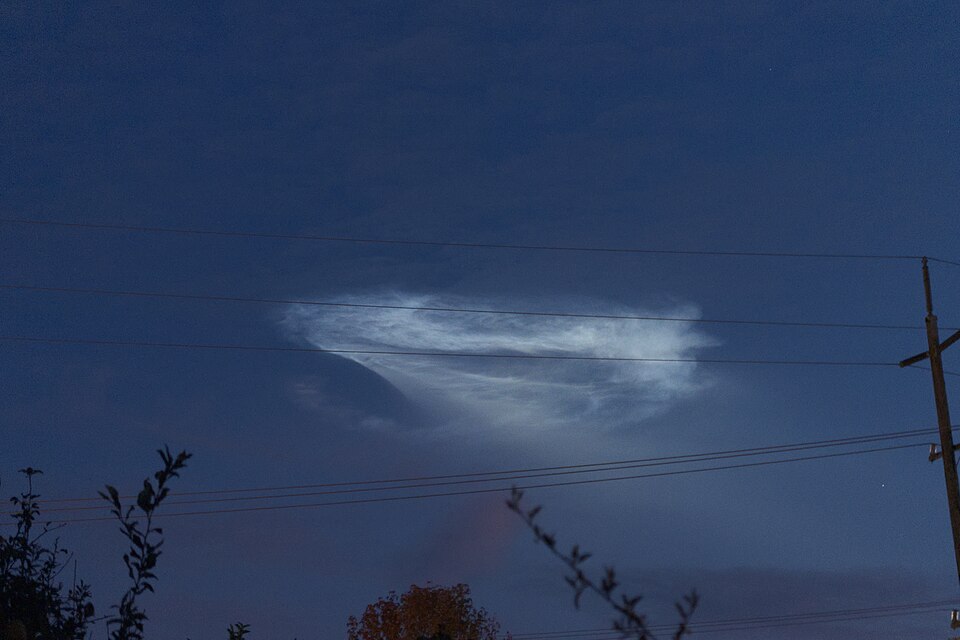
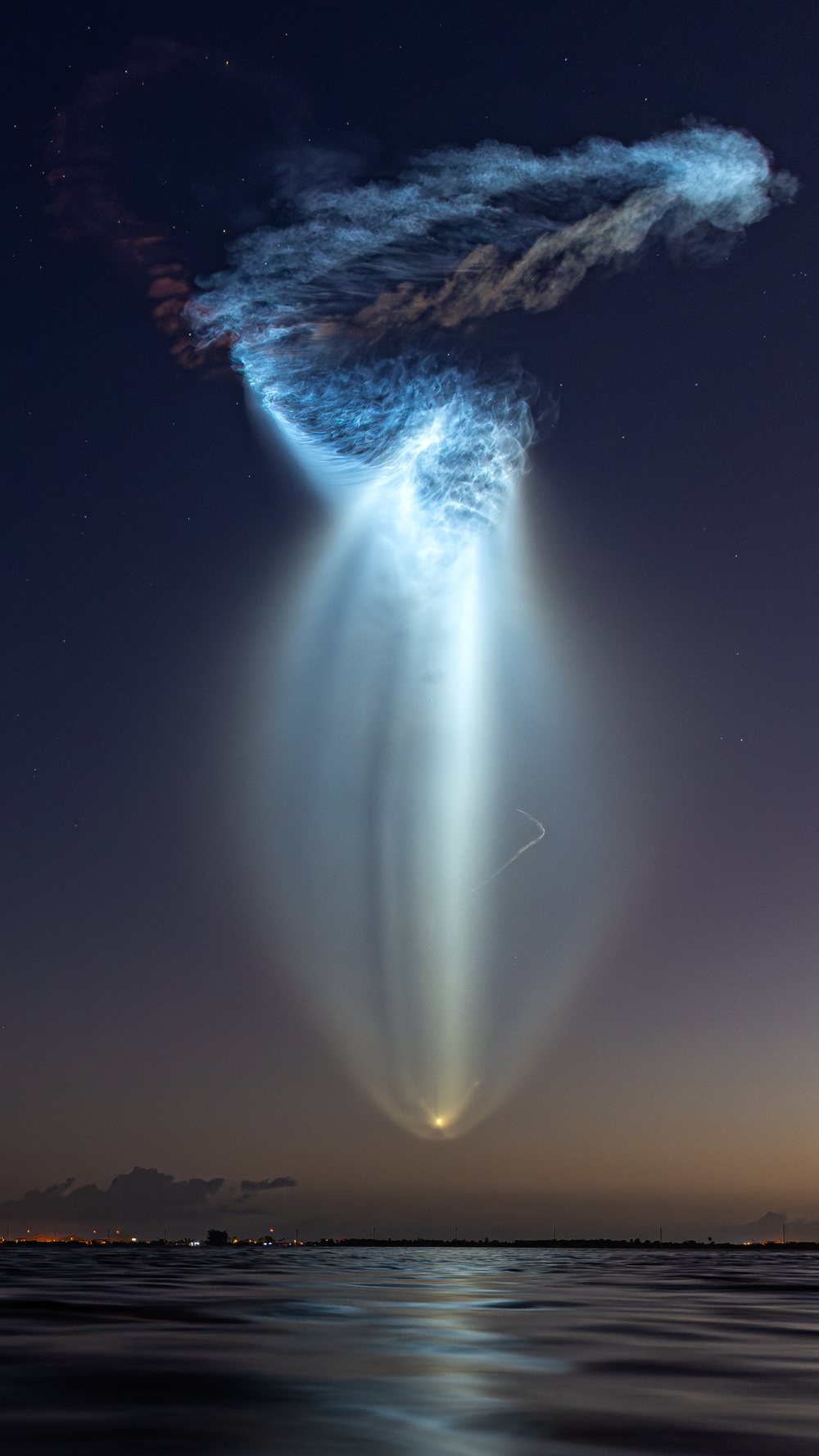
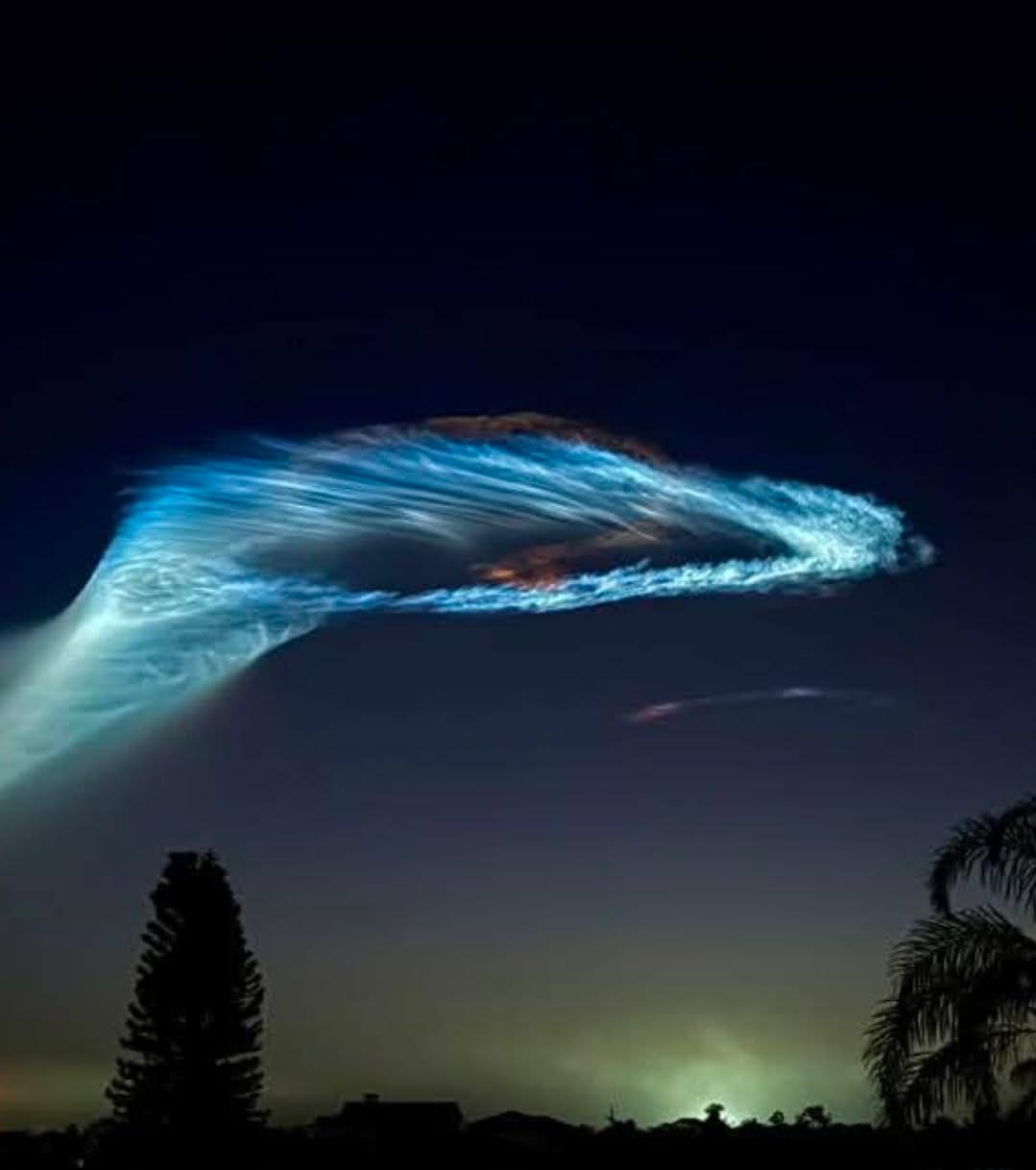
Not one of the twenty-seven defenses disputes the fact that does the damage: William Branham was not at the cloud. The documented record — the account of his daughter, Rebekah Branham Smith — places him at home in Tucson on February 28, two hundred miles from Flagstaff. The defenders do not contest his absence; several volunteer it. Jesse Smith and Cameron Smith both grant he was not under the cloud — though they place him in Texas, apparently conflating his trip to Houston, which the record dates to early March, after the cloud. Allistair Francis grants the cloud may have been "a formation of gases fired from a rocket." The factual case against the cloud is not contested by its defenders — it is conceded, and then built around.
Genuine evidence does not need two dozen fallacies and a six-hour counter-science to survive scrutiny — it survives by being checked. For sixty years the cloud has been the movement’s flagship proof: hung on church walls, printed in its literature, handed to every newcomer as evidence that William Branham was vindicated by God. Everything documented in this article is what is now left holding it up.
And its own defenders can no longer hold the line. Allistair Francis, in the middle of defending the Message, said it outright: the cloud “is not public vindication… it’s just stupidity to think that it’s public vindication” — and “many message people made it that way.” Read that again. A Message pastor, defending Branham, has told his own movement that the believers who treated the cloud as vindication — which is the movement, and has been for three generations — were being stupid. The farce was never the critics’ doing. The Message built this proof, preached it for sixty years, and has now been handed back, by one of its own, the verdict that there was never any proof at all.